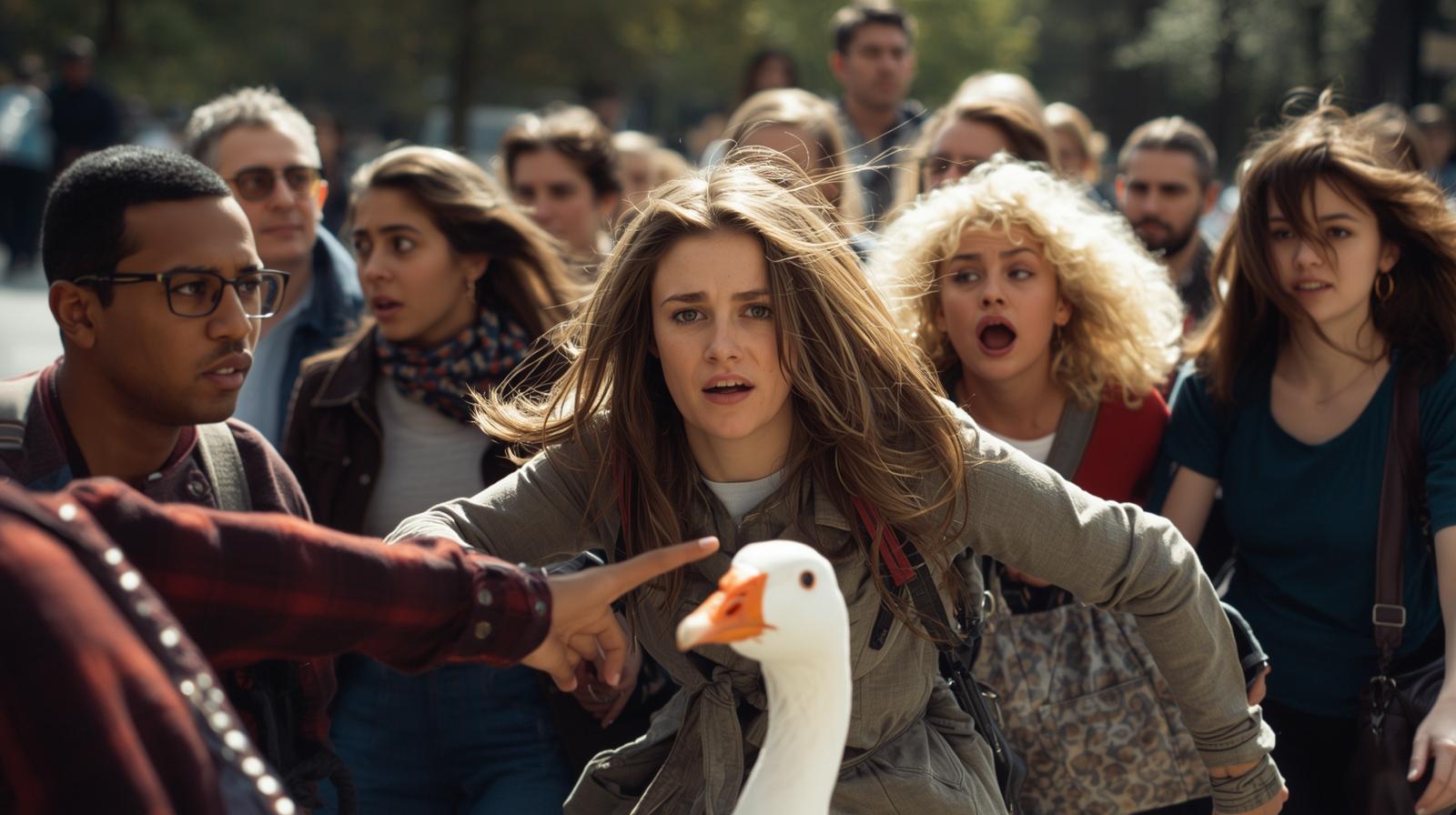
We’ve all felt that sinking realization that time, energy, and hope have been spent on something that was never going to pan out. The deal that wouldn’t be closed. The answer that never arrives. The certainty that dissolved the closer you got.
That moment has a name: the wild goose chase.
A wild goose chase is an idiomatic expression describing a fruitless pursuit—an energetic search for something nonexistent, unattainable, or fundamentally impossible to secure. The phrase survives because the experience it captures is timeless. Across centuries, industries, and cultures, humans have chased illusions with remarkable persistence.
“A wild-goose chase is the pursuit of something as unlikely to be caught as a wild goose.”
— Samuel Johnson, A Dictionary of the English Language (1755)
That definition still holds. What has changed is how often we encounter these chases—and how cleverly they disguise themselves.
From Horse Tracks to Human Folly: The Origins of the Phrase
The expression “wild goose chase” did not begin as a metaphor. It began asa sport.
Elizabethan Horse Racing
In 16th‑century England, a “wild goose chase” referred to a peculiar form of horse racing. Riders followed a lead horse across an unpredictable, erratic course, maintaining distance and format on. Observers likened the pattern to wild geese flying in a loose V-shape. The emphasis was not on failure, but on chaos and lack of direction.
The metaphor came later.
Shakespeare Gives It Teeth
William Shakespeare elevated the phrase from sport to psychology. In Romeo and Juliet (circa 1597), Mercutio uses it to describe a clever but pointless battle of wits:
“Nay, if thy wits run the wild-goose chase, I have done.”
— Romeo and Juliet, Act II, Scene IV
Here, the meaning shifts. The chase is no longer erratic—it’s exhausting, circular, and ultimately unrewarding.
The Modern Definition Takes Hold
By the mid‑18th century, Samuel Johnson cemented the idiom’s modern meaning. No longer about movement without direction, a wild goose chase became about pursuit without possibility. The problem wasn’t confusion—it was futility.
That distinction matters because it explains why the phrase remains so powerful today.
Why the Wild Goose Chase Still Resonates
A wild goose chase isn’t just wasted effort. It’s a misdirected belief.
We don’t embark on these pursuits thinking they’re hopeless. We start because something looks promising—just plausible enough to justify another email, another meeting, another late night.
The danger lies in the illusion of progress.
Modern professionals encounter wild goose chases everywhere:
- Entrepreneurs chasing scale before product-market fit
- Investorsare waiting for a “temporary” downturn to reverse
- Homebuyers searching for yesterday’s prices in today’s market
- Organizations pursuing compliance, not outcomes
Each step feels rational. Collectively, they lead nowhere.
A wild goose chase is rarely obvious at the beginning. If it were, no one would start.
Common Synonyms—and What They Reveal
Language offers multiple ways to describe futile effort, and each synonym highlights a slightly different failure mode.
Fool’s Errand
A task doomed from the start. Theimpossibility is structural, not accidental.
Red Herring
A distraction masquerading as relevant H.ere, the chase succeeds—but only in leading you away from the truth.
Snipe Hunt
A practical joke involving the search for something that doesn’t exist. Often used to describe institutional or cultural hazing.
Vain Inquiry
An investigation that yields no actionable insight.Data without me ning. Effort without clarity.
Each term reflects a different way humans misallocate attention.
The Psychology Behind the Chase
Why do smart people fall for wild goose chases?
Behavioral economists and organizational psychologists point to three recurring forces:
-
Sunk Cost Bias – The more we invest, the harder it becomes to quit.
-
Hope as Strategy – Optimism replaces evidence.
-
Narrative Momentum – We confuse movement with progress.
Professionals often persist not because they believe success is likely, but because stopping would require admitting the chase was misguided.
Quitting, paradoxically, feels like failure—even when continuing guarantees it.
Contemporary Uses Beyond the Idiom
The phrase has also been adopted in modern branding and culture, often with deliberate irony.
Business and Services
“Wild Goose Chase” is the name of a professional bird‑control company specializing in humane goose and gull management. In this case, the chase is literal—and successful.
Events and Causes
The Wild Goose Chase Women’s Bicycle Ride supports conservation efforts at Maryland’s Blackwater National Wildlife Refuge, reframing the phrase as endurance with purpose.
Spiritual and Literary Use
In Wild Goose Chase, author Mark Batterson draws on the Celtic Christian tradition, in which the Holy Spirit was symbolized as a “wild goose”—unpredictable, untamable, and resistant to human control. The metaphor flips the idiom on its head: not all chases are meant to end in capture.
When a Wild Goose Chase Is Actually Worth It
Not every uncertain pursuit is a mistake.
The difference lies in intent and awareness.
A destructive wild goose chase pretends certainty exists when it doesn’t. A productive one acknowledges uncertainty and proceeds anyway—eyes open, downside capped.
Artists, scientists, and entrepreneurs often pursue goals that look futile from the outside. The key distinction is whether the pursuit creates learning, optionality, or meaning, even if the original objective remains elusive.
The problem isn’t chasing geese. It’s insisting they were ever meant to be caught.
The Enduring Lesson
The idiom survives because it offers a gentle warning rather than a condemnation. t Iteminds us that effort alone does not guarantee value—and that discernment matters as much as determination.
In an age of endless information, constant motion, and performative productivity, the wild goose chase is more relevant than ever.
Sometimes the smartest move isn’t to run faster—but to stop, look up, and ask whether the chase was real to begin with.