Summary
“You can argue until the cows come home, but it won’t change my mind.” It conveys the idea of persistence or duration, usually humorously or exaggeratedly.
Origin
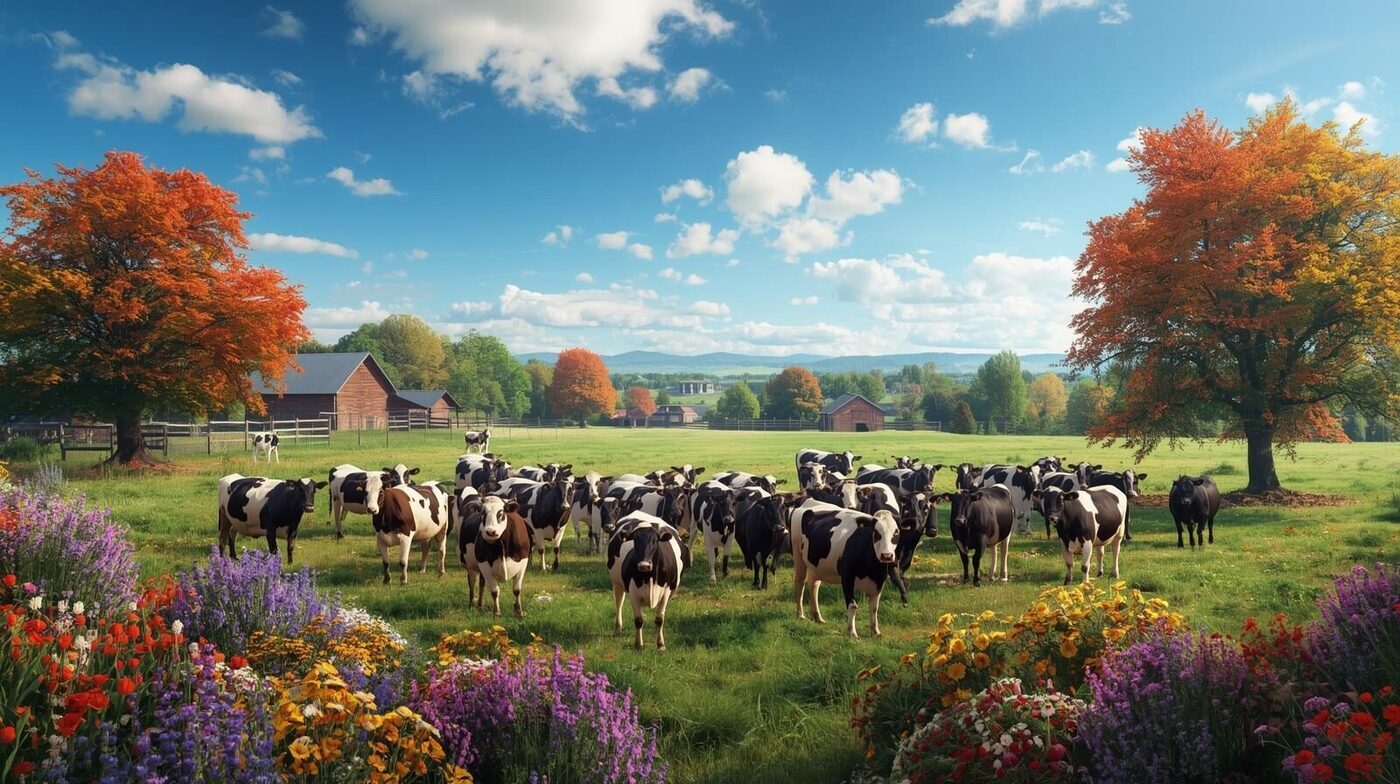
The phrase dates to Scotland in the early 19th century. It refers to the behavior of cows, which typically spend the day grazing in fields and only return to their barns or home at night. Since cows move slowly, the expression became a metaphor for something that takes a very long time.
The earliest recorded use is believed to be in Scottish literature around 1829, and it later spread into common English usage.
Why Cows?
Cows symbolize leisurely, slow movement. Farmers knew that waiting for cows to return could feel endless, so the phrase naturally evolved to describe prolonged waiting or activity.
Here’s the expanded list with meanings, examples, and origins for each idiom:
Idioms About Long Duration
· Till kingdom come
Meaning: Forever or for a long time.
Example: “You can keep waiting till kingdom come, but they won’t change their decision.”
Origin: Dates back to biblical language, referring to the coming of God’s kingdom—a time perceived as infinitely far away.
· For donkey’s years
Meaning: For a very long time.
Example: “I’ve known him for donkey’s years—we went to school together.”
Origin: British slang from the early 20th century; “donkey’s ears” was Cockney rhyming slang for “years,” later evolving into “donkey’s years.”
· Until hell freezes over
Meaning: Something that will never happen or take an eternity.
Example: “She’ll apologize when hell freezes over.”
Origin: American idiom from the late 19th century, based on the impossibility of hell—a fiery place—freezing.
· For ages and ages
Meaning: For a very long time.
Example: “We’ve been waiting for ages and ages for the bus.”
Origin: Common English phrase since the 18th century, emphasizing repetition for dramatic effect.
· Till the end of time
Meaning: Forever.
Example: “I’ll love you till the end of time.”
Origin: Biblical and poetic usage, symbolizing eternity.
Idioms About Waiting
· In the fullness of time
Meaning: Eventually, when the time is right.
Example: “In the fullness of time, you’ll understand why this happened.”
Origin: Biblical phrase from Galatians 4:4, meaning “at the appointed time.”
· At the crack of dawn
Meaning: Very early in the morning.
Example: “We left at the crack of dawn to avoid traffic.”
Origin: Dates to the 19th century, referring to the first light breaking like a “crack.”
· In due course
Meaning: At the appropriate time.
Example: “Your application will be reviewed in due course.”
Origin: Legal and formal English from the 18th century, meaning “in the normal sequence.”
· When pigs fly
Meaning: Something that will never happen.
Example: “He’ll clean his room when pigs fly.”
Origin: Scottish proverb from the 16th century; pigs flying was considered absurd.
· Bide your time
Meaning: Wait patiently for the right moment.
Example: “She’s biding her time before making her move.”
Origin: Old English “bidan” meaning “to wait,” used since the 14th century.
Idioms About Speed
· In the blink of an eye
Meaning: Very quickly.
Example: “The car disappeared in the blink of an eye.”
Origin: Biblical phrase from 1 Corinthians 15:52, describing suddenness.
· In no time
Meaning: Almost immediately.
Example: “We’ll be there in no time.”
Origin: Common English phrase since the 16th century, emphasizing speed.
· Like clockwork
Meaning: Happening regularly and predictably.
Example: “The trains run like clockwork in Japan.”
Origin: From the precision of mechanical clocks, popularized in the 18th century.
· In a heartbeat
Meaning: Instantly.
Example: “I’d do it again in a heartbeat.”
Origin: American idiom from the early 20th century, comparing speed to a single heartbeat.
· At the eleventh hour
Meaning: At the last possible moment.
Example: “They submitted the proposal at the eleventh hour.”
Origin: Biblical reference (Matthew 20:6) to workers hired at the last hour of the day.