Summary
Every person knows what I am talking about! How much of your efforts and emotions can you put into another without calling it quits?
Why We Hold On
We hold on because we care. Because we see what could be, even when reality whispers otherwise. Sometimes it’s love, sometimes duty, sometimes the stubborn belief that persistence conquers all. And often, it doesn’t. There’s a fine line between perseverance and self-erasure, and crossing it can leave us depleted, resentful, and questioning our worth.
The Cost of Clinging
Holding on when someone refuses to respond is not just exhausting; it can be corrosive. It eats away at our energy, our confidence, and even our identity. We start to measure our value by their reaction, forgetting that their silence is not a verdict on our worth. The truth is that people change only when they choose to. No amount of nurturing can override unwillingness.
Letting Go Is Not Failure
This is the most truthful thing to accept: releasing someone does not mean you failed. It means you recognize reality and choose peace over pain. It means you honored your own boundaries and reclaimed your life from a cycle that no longer serves you. Letting go is not abandonment—it’s alignment. It’s saying;
“I gave my best, and now I choose to give myself the same care I offered you.”
The Freedom Beyond
When you let go, you create space—for healing, for new relationships, for growth that isn’t tethered to resistance. You rediscover the parts of yourself that got lost in the struggle. And you learn that love and effort are never wasted; they shape you, even if they never change them. Every act of care leaves an imprint on your character, even if it leaves no mark on theirs. This freedom is a breath of fresh air, a liberation from the weight of persistence. It's a step towards a brighter future, filled with new beginnings and possibilities.
A Gentle Invitation
If you’re standing at that crossroads—wondering if it’s time—ask yourself:
-
Is this effort nourishing me or draining me?
-
Am I holding on to hope or to fear of loss?
-
What would life look like if I released this weight?
Sometimes, the bravest thing you can do is open your hands and trust that what falls away is never meant to stay.
Practical Steps for Letting Go Gracefully
· Acknowledge Your Effort
Remind yourself that your investment of time and care was authentic and meaningful. It shaped you, even if it didn’t change them.
· Clarify Your Boundaries
Ask: What is this costing me—emotionally, mentally, financially? If the cost outweighs the benefit, it’s time to step back. This act of setting boundaries is not a sign of weakness, but a powerful declaration of self-worth and self-care.
· Have One Honest Conversation
Before walking away, express your intentions clearly. Ask if they genuinely want your help or involvement. Sometimes clarity comes from a single candid exchange.
· Release Without Resentment
Letting go doesn’t mean bitterness. It means choosing peace over pain. Wish them well—even silently—and move forward.
· Redirect Your Energy
Invest in what nourishes you: relationships that reciprocate, goals that inspire, and habits that restore your sense of self. This redirection of energy is a beacon of hope, guiding you towards a brighter future. It's a reminder that there are always new opportunities and experiences waiting for you.
Closing
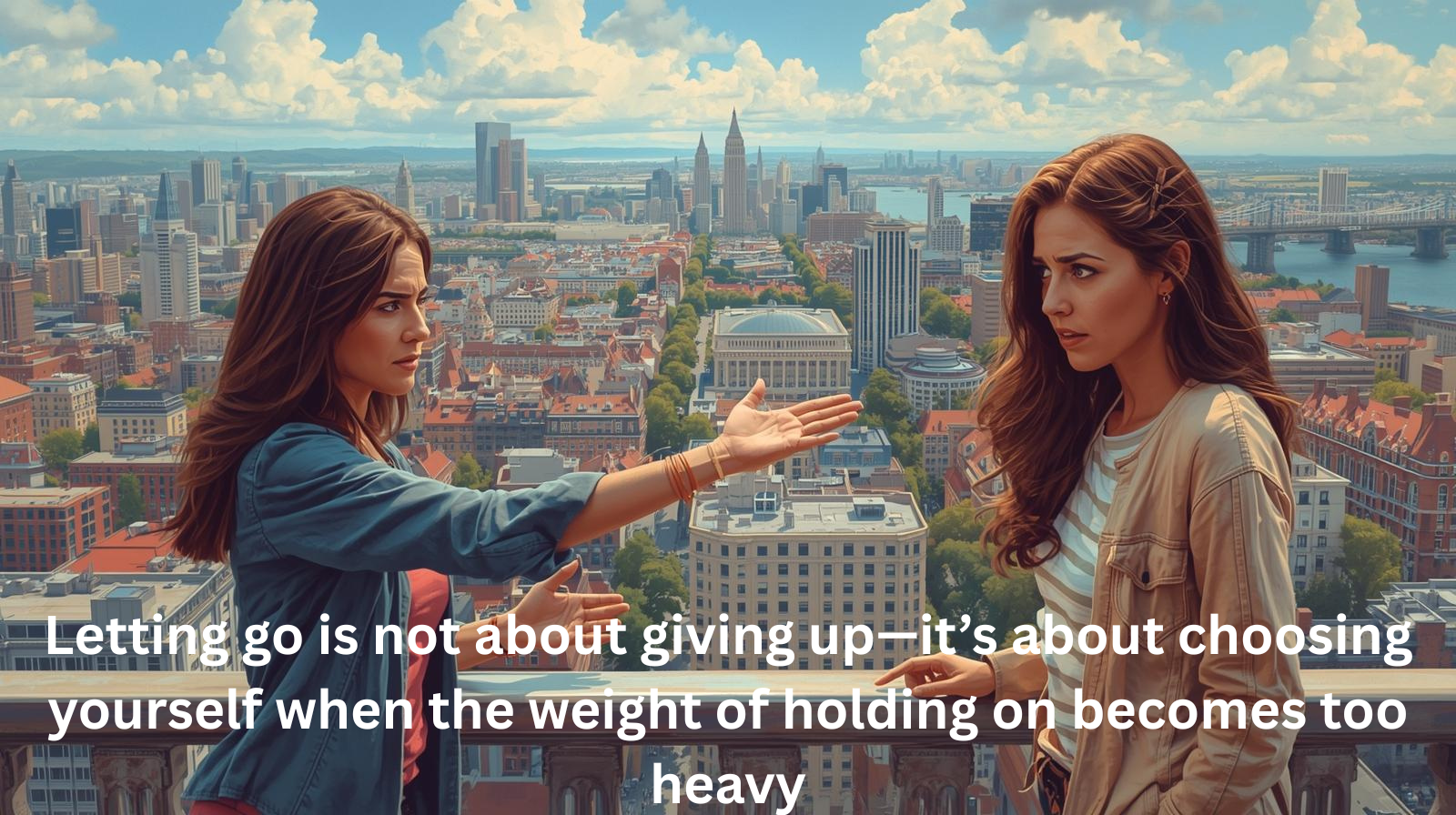
Letting go is not about giving up—it’s about choosing yourself when the weight of holding on becomes too heavy. It’s an act of courage, a declaration that your peace matters as much as your persistence. When you release what resists, you open the door to what’s meant for you. And in that space, life has a way of surprising you with new beginnings.