Summary
Among their catalog, “Light My Fire” stands as both an artistic milestone and a cultural phenomenon, showcasing their pioneering spirit that continues to inspire admiration.
Video:
https://www.youtube.com/watch?v=ITIdKgrA-4Q
https://www.youtube.com/watch?v=jKU74Uns9_0
https://www.youtube.com/watch?v=xXgCIj
https://www.youtube.com/watch?v=igGSmii2KV0
Origins of a Breakthrough
“Light My Fire” began with guitarist Robby Krieger, who composed the core structure after Morrison urged band members to write “something universal.” Morrison’s lyrical contributions, including the line “Try to set the night on fire,” infused the song with themes of passion and liberation, embodying the band’s desire to challenge societal norms and inspire a generation.
This collaborative process built a musical hybrid filled with flamenco-tinged guitar motifs, Baroque-inflected organ lines, and Latin‑jazz drum patterns, a blend that distinguished the song from standard rock fare.
The band’s long-form experimentation came naturally. In live performances as early as April 1966, The Doors extended the song with jazzy improvisations, laying the groundwork for the expansive seven-minute album version released in 1967.
Launching The Doors into Stardom
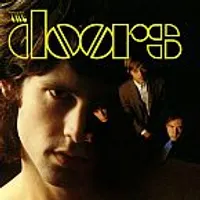
When “Light My Fire” debuted on the band’s self-titled 1967 album, it quickly emerged as the standout track. The song’s success transformed The Doors from local favorites into international figures. It became their first No. 1 hit, topping the Billboard Hot 100 on 29 July 1967, and served as a symbol of the 1960s counterculture, reflecting the era’s desire for change and rebellion.
The track also marked a turning point for Elektra Records, whose reputation expanded beyond folk music thanks to the song’s mass appeal.
But achieving commercial success required compromise. The seven-minute album cut, filled with extended solos, was too long for mainstream radio. A shorter single edit was released to secure airplay—an example of the delicate balance between the band’s commitment to musical exploration and the commercial demands of the industry.
Cultural Impact: Lighting the Fuse of a Generation
The release of “Light My Fire” coincided with a moment of profound social change. In 1967—the year of the Summer of Love—the song became an emblem of the era’s passion for experimentation, liberation, and boundary-breaking creativity. Its swirling organ intro and hypnotic structure captured the collision of beauty, rebellion, and mysticism that defined the psychedelic age.
Unlike other California-based bands known for surf harmonies or acid-drenched folk rock, The Doors brought something darker and more theatrical. Jim Morrison’s shamanistic stage presence, Manzarek’s cathedral-like organ textures, Krieger’s Spanish-influenced guitar lines, and Densmore’s jazz-infused rhythms produced a sound that was both seductive and unsettling—an artistic expression of the era’s tensions.
“Light My Fire” didn’t simply reflect the era; it helped shape it. Its fusion of pop melody and extended instrumental exploration influenced the development of psychedelic and progressive rock, inspiring future artists and demonstrating that commercial success and avant-garde experimentation could coexist and evolve within popular music.
As it spread across the country through radio, dorm rooms, and concert halls, the song became part of the collective consciousness, an anthem for listeners seeking both escape and enlightenment.
Longevity and Legacy
The legacy of “Light My Fire” continued well beyond the 1960s. In 1968, the song re-entered the Billboard charts following José Feliciano’s cover, which reached No. 3 and later earned him two Grammy Awards, including Best New Artist.
This cross-genre success underscored the song’s adaptability and timeless appeal.
Decades later, cultural retrospectives continue to highlight “Light My Fire” as one of rock’s most innovative and influential recordings, praising its musical ambition and its embodiment of the era’s revolutionary spirit. Its endurance speaks to the strength of its composition and its symbolic power as a musical spark that helped ignite a generation, fostering respect for its enduring legacy.
Conclusion
“Light My Fire” remains the quintessential Doors track—not just a hit single, but a cultural artifact. It encapsulates the band’s innovative spirit, the artistic experimentation of the late 1960s, and the restless longing that defined a generation pushing against the boundaries of convention. More than five decades after its release, the flame lit by The Doors continues to burn, illuminating both the era that created it and the enduring artistry that keeps it alive.