Summary
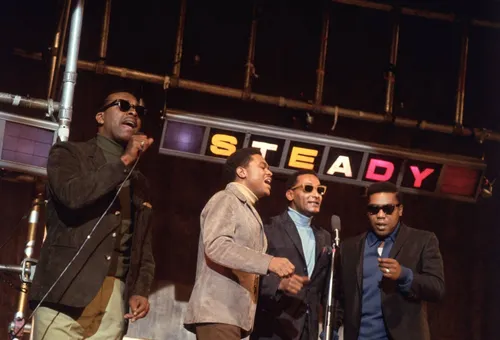
If the Temptations were Motown’s sleek romantics, the Four Tops were often its emotional powerhouse, built around a lead voice that sounded like joy and heartbreak happening at the same time.
Videos:
https://www.youtube.com/watch?v=qXavZYeXEc0
https://www.youtube.com/watch?v=2ndnINyBPRU
https://www.youtube.com/watch?v=FPj7FOlaY5A
A Detroit group with rare stability—and a rare lead voice
Formed in Detroit in the early 1950s (originally as the Four Aims), the group’s classic lineup—Levi Stubbs, Abdul “Duke” Fakir, Renaldo “Obie” Benson, and Lawrence Payton—became legendary not only for their harmonies but for staying together for decades with minimal personnel change.
They stood out in the era because Stubbs led with a baritone—a distinctive choice when many male vocal groups were fronted by higher tenors—giving their records a dramatic, urgent center.
After years of working in clubs and recording for multiple labels, they joined Motown in the early 1960s and soon aligned with the label’s most successful hitmaking system.
The Motown engine behind the magic: Holland–Dozier–Holland
“I Can’t Help Myself” was written and produced by Holland–Dozier–Holland (H-D-H)—Brian Holland, Lamont Dozier, and Eddie Holland—Motown’s premier songwriting/production team during the label’s mid-’60s peak.
The Four Tops became the primary male vocal showcase for H-D-H’s style: propulsive rhythm, bright pop structure, and hooks engineered for radio—and for dancing.
“Sugar Pie, Honey Bunch” goes to No. 1
Released on 23 April 1965, “I Can’t Help Myself (Sugar Pie, Honey Bunch)” became a defining Motown hit that shaped the sound of the era and remains influential today.
The song’s chart success, topping Billboard’s R&B chart for nine weeks and reaching No. 1 on the Billboard Hot 100, can inspire admiration and appreciation for its cultural significance.
The song’s title formatting even reflects its cultural life: the bracketed “Sugar Pie, Honey Bunch” appears prominently on many oldies reissues, keeping the hook front and center for new listeners.
Why the record still hits: urgency wrapped in sweetness
Part of the record’s enduring power is its emotional contradiction—a playful, sugary term of endearment delivered with a voice that sounds genuinely overwhelmed.
The track is also a textbook example of the Motown Sound, pairing a driving groove with tight background vocals and polished production that made Detroit records feel universal.
And like many Motown classics, it helped define the Four Tops’ lane: big-feeling love songs that are as theatrical as they are danceable.