Video:
https://www.youtube.com/watch?v=Q-yo4fvPoOY
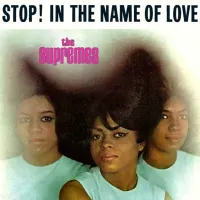
“Stop! In the Name of Love” was not background music. It was a command wrapped in polish, rhythm, and nerve. Recorded by The Supremes for Motown and written/produced by Holland-Dozier-Holland, the song became one of the group’s signature hits and part of the machine that turned Motown from a label into a cultural force.
This was not accidental success. The Supremes were already climbing, but this record helped cement a historic run. GRAMMY.com says the group released five consecutive No. 1 records from 1964 to 1965, with “Stop! In the Name of Love” in the middle of that streak. That is not a lucky bounce. That is domination in heels.
And let’s be honest about why it still lands. The song is clean, elegant, and controlled—but underneath the glamour is confrontation. It does not beg. It warns. It takes heartbreak, puts a spine in it, and sends it back across the table. That is part of what made The Supremes different: they could sound refined without sounding weak. Motown Museum places the song among the group’s “mega-hits” during the years they became international stars.
The record also carried the kind of visual stamp the culture never forgot. Motown Museum notes that visitors can stand in Studio A where The Supremes first issued their command to “Stop! In the Name of Love,” a reminder that this was not just another single—it became part of the permanent architecture of the Motown story: the gesture, the delivery, the attitude—instantly recognizable, decades later.
Awards and honors followed because the industry could not ignore them. GRAMMY.com lists the song as a nomination for Best Contemporary (R&R) Performance by a Group at the 8th Annual GRAMMY Awards, and Motown Museum says the recording was later inducted into the GRAMMY Hall of Fame.
Here is the bottom line:
“Stop! In the Name of Love” survived because it had teeth. It was polished enough for mass audiences, sharp enough to cut through the noise, and strong enough to outlive the era that created it. The Supremes did not merely sing hit records. They helped draw the blueprint for what a successful female group in American pop could look and sound like, and GRAMMY.com explicitly credits them with helping shape the model for future pop-R&B girl groups.
That is why this song still matters. Not because it is old. Not because it is famous. Because it still walks into the room as if it owns it.