Summary
Free Sacred Trinity Church (FSTC) is not trying to win a discretionary entitlement fight. The SB-4 strategy is to avoid that fight entirely by placing a qualifying affordable Housing proposal into a ministerial, checklist-based approval lane—the lane SANDAG summarizes as “Ministerial” and “Not a project for purposes of CEQA.”
This tailored guide explains what ministerial review means, how it should operate for FSTC, and how to prevent process “drift” back into discretionary review and CEQA-style delay.
1) Ministerial Review—What It Means (and What It Doesn’t)
Definition (the clean legal standard)
A ministerial decision involves little or no personal judgment by the public official; staff merely applies the Law to the facts using fixed standards or objective measurements and cannot use subjective judgment about whether or how the project should be carried out.
Plain English for FSTC: understanding that ministerial review is about code compliance ensures focus on objective standards rather than political discretion, helping to keep the process on track.
Why that matters under CEQA
CEQA’s Guidelines state that ministerial projects are exempt from CEQA, and each agency should identify what it treats as ministerial through its own regulations or case-by-case determinations.
The most important warning
If a project involves approvals that mix ministerial and discretionary elements, CEQA’s Guidelines instruct that the project is treated as discretionary and becomes subject to CEQA.
FSTC takeaway: one discretionary permit can “pull” the whole project back into the slower lane.
2) Why SB 4 Is Built for Ministerial Review (and How SANDAG Confirms It)
SB 4 (Gov. Code § 65913.16) establishes the Affordable Housing on Faith and Higher Education Lands Act of 2023, creating a streamlined, ministerial approval pathway for eligible projects on qualifying religious/higher-education land.
SANDAG’s Housing Processing Comparison Chart (April 2024) lists SB 4 as “Ministerial” and uniquely labels its CEQA status as “Not a project for purposes of CEQA.”
Practitioner guidance similarly describes SB 4 as “use by right,” not requiring discretionary local review, and not a CEQA “project” when criteria are met.
FSTC takeaway: SB 4 is not about persuading a planning commission to prove eligibility and demonstrate objective compliance.
3) What Ministerial Review Should Look Like for FSTC (Operationally)
When a city processes an SB 4 application correctly, the workflow should resemble a structured plan check:
· Completeness determination (timed)
Streamlined Housing programs typically include firm deadlines for determining whether the submittal is complete; SANDAG’s chart summarizes SB 4 timelines and process expectations for local agencies.
· Eligibility verification (checklist logic)
SANDAG’s SB 4 checklist is explicit: if any required item is “no,” the project is not eligible; if “yes,” the applicant must support the determination with exhibits.
· Objective standards plan check (no subjective design discretion)
Ministerial review is based on objective, uniformly verifiable standards, not open-ended “character” judgments. Local guidance on these standards emphasizes that ministerial permits do not permit discretionary interpretation.
· Approval if compliant
Once objective compliance is demonstrated, staff cannot deny the project based on preferences, because ministerial decisions require applying fixed standards to facts without subjective judgment.
4) The FSTC “SB 4 Fast Lane” Package: What to Include (Exhibits That Prevent Delay)
SANDAG’s SB 4 checklist tells applicants to prove eligibility with supplemental exhibits where appropriate.
For FSTC, that translates into a tight submission organized into four binders (digital folders work too):
Binder A — Site & Ownership Eligibility
- Evidence that the land was owned by the religious institution by the statutory date (SB 4 eligibility premise).
- Maps/photos showing “urbanized area/cluster” conditions and perimeter urbanization where required (SANDAG checklist structure).
Binder B — Affordability & Deed Restriction Compliance
- A one-page affordability table showing the SB 4 set-asides (e.g., lower-income baseline with allowed moderate-income and staff allowances) consistent with SB 4 summaries and checklist framing.
- Draft deed restriction term sheet consistent with the SB 4 checklist’s deed restriction requirements.
Binder C — Objective Standards Matrix (“No Subjectivity” Proof)
- A matrix mapping each zoning/building standard to plan sheets (height, setbacks, FAR, parking, fire access), reinforcing the ministerial review’s “objective measurement” nature.
- A short “Objective Standards Statement” reminding reviewers that ministerial review is based on fixed standards and excludes subjective judgment.
Binder D — Process Positioning (Your “Don’t Drift” Shield)
- A cover letter that quotes SANDAG’s chart: SB 4 = Ministerial and “Not a project for purposes of CEQA.”
- A copy of the SANDAG SB 4 checklist filled out with exhibit references.
Advocacy-forward point: FSTC’s goal is to make the city’s “yes” feel administrative, not political.
5) The Two Ways Cities Accidentally Re-Create CEQA Delay—and How FSTC Stops It
Problem #1: “Exemption thinking” creeps in
Staff used to CEQA may ask: “Which exemption are you using?” That’s the wrong frame for SB 4 when processed as “not a project for purposes of CEQA” per SANDAG’s chart.
FSTC response script (polite, firm):
“This is a Gov. Code § 65913.16 SB 4 streamlined application. SANDAG’s regional processing chart lists SB 4 as ministerial and ‘not a project for purposes of CEQA.’ Our submittal is organized to confirm eligibility and objective compliance.”
Problem #2: Subjective “design preferences” get inserted
Ministerial decisions cannot rest on subjective judgment; they must be based on fixed standards or objective measurements.
FSTC pushback question (the best single sentence you can use):
“Can you point us to the objective standard that requires this change?”
This keeps the review anchored to ministerial rules rather than discretionary taste.
6) Red Flags for FSTC: Requests That Can Pull You Out of Ministerial Review
Because mixed ministerial/discretionary approvals are treated as discretionary under CEQA Guidelines, FSTC should treat the following as “process risk” items:
- Variance requests (often discretionary by nature and findings-based).
- Discretionary design review with subjective criteria (“compatible,” “harmonious,” “high quality”) unless the standards are made objective.
- Any request for a public hearing framed as necessary to approve the project (hearings typically accompany discretionary calls).
FSTC takeaway: keep everything in the file written as objective compliance; avoid creating discretionary “hooks.”
7) A Short, FSTC-Specific Vignette (Use This Article in Meetings or Publications)
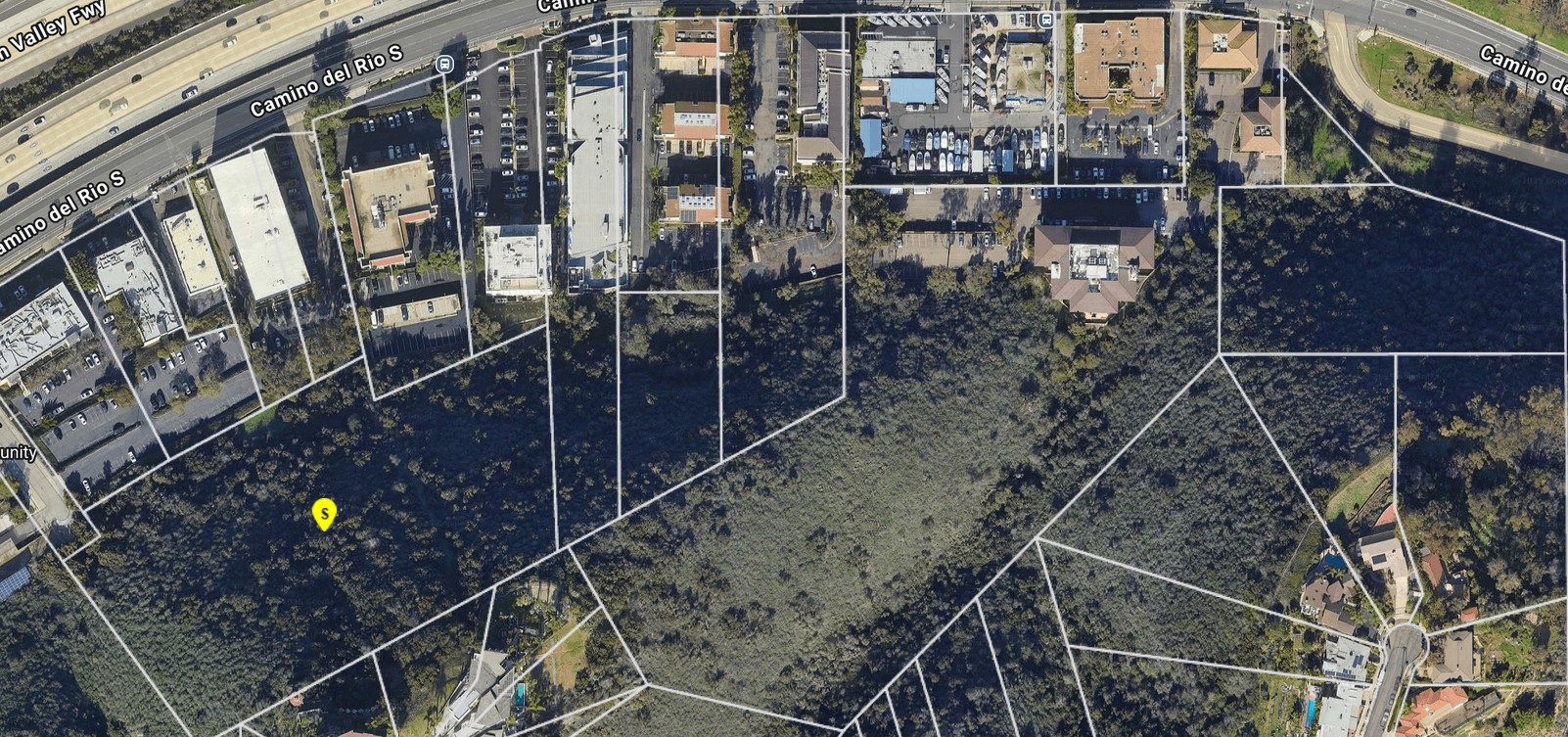
FSTC’s SB 4 proposal is best understood as a conversion of underutilized church land into permanently affordable homes using the exact kind of streamlined pathway the Legislature created for faith institutions.
In the earliest staff meetings, the most common friction point is not architecture—it’s classification: staff revert to CEQA habits (“Which exemption?”) even though SANDAG’s regional chart flags SB 4 as ministerial and “not a project for purposes of CEQA.”
Once FSTC reframes the discussion to eligibility and objective standards—mirroring the SANDAG SB 4 checklist—the process becomes what SB 4 intended: a compliance confirmation, not a discretionary contest.
8) FSTC’s One-Page “Ministerial Review” Talking Points
Use these bullets in emails, cover letters, and meeting notes:
- Ministerial review means staff apply fixed standards and objective measurements without subjective judgment.
- Ministerial projects are exempt from CEQA, and discretionary “mix-ins” can convert a project back into discretionary status.
- SB 4 (Gov. Code § 65913.16) provides a streamlined, ministerial approval pathway for qualifying projects on religious land.
- SANDAG’s April 2024 chart lists SB 4 as ministerial and “not a project for purposes of CEQA.”
- Therefore, the city’s task is to verify eligibility and objective compliance, not to apply discretionary preference standards.