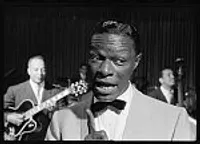
Summary
Nat King Cole’s Impact wasn’t loud. It was subtle and strategic, shaping perceptions without overt confrontation. He didn’t rant. He didn’t posture. He didn’t lead marches from the microphone. Instead, he did something far more destabilizing to mid-20th-century America: he made excellence non-negotiable.
a) The Very Thought of You
https://www.youtube.com/watch?v=qaYLWSo4fYM
b) Stardust
https://www.youtube.com/watch?v=DjU6ZjrQulc
c) Unforgettable
https://www.youtube.com/watch?v=JFyuOEovTOE
Nat King Cole Didn’t Break Barriers by Shouting—He Broke Them by Being Unavoidable
Nat King Cole’s Impact wasn’t loud. It was subtle and strategic, shaping perceptions without overt confrontation.
He didn’t rant. He didn’t posture. He didn’t lead marches from the microphone. Instead, he did something far more destabilizing to mid‑20th‑century America: he made excellence non‑negotiable.
Cole entered American living rooms at a time when many of those rooms weren’t prepared to see him there. In 1956, The Nat King Cole Show debuted on NBC—making him the first Black American to host a nationally broadcast television variety show. The show didn’t fail creatively; it failed commercially because major sponsors refused to attach their brands to a Black host. That wasn’t ambiguity. That was exposure. Cole didn’t argue the point—he exposed it.
https://myknct.com/2025/11/05/on-this-day-in-1956-nat-king-cole-breaks-television-barriers/
https://blackculturenews.com/2025/09/nat-king-cole-breaks-barriers-the-night-he-became-the-first-black-performer-to-host-a-national-tv-show#google_vignette
Musically, Cole rewrote the rules twice. First, as a jazz pianist, leading the King Cole Trio and redefining small‑group swing without drums—clean lines, quiet authority, zero excess. Then, as a vocalist, his baritone became a national Trust asset. Songs like “Mona Lisa,” “Nature Boy,” and “Unforgettable” didn’t sell rebellion—they sold credibility. America listened because the delivery was impeccable, the phrasing intelligent, and the tone bulletproof.
That mattered. In an era addicted to caricature, Cole presented composure—tailored suits. Precise diction. No gimmicks. No anger leaks. Just command. Cultural critics later noted that while his music wasn’t overtly political, his very presence in mainstream media challenged prevailing racial stereotypes by contradicting them night after night. This calm, confident demeanor can inspire the audience to see leadership as composed and effective.
https://theconversation.com/nat-king-coles-often-overlooked-role-in-the-civil-rights-movement-248527
And this is where the revisionists get it wrong. Cole wasn’t passive—he was strategic. His support for civil rights, his performances at benefit events, and his participation in the 1963 March on Washington aimed to inspire admiration and respect, showing restraint as a powerful form of influence. Those restraints irritated activists then—and still confuse commentators now. But restraint was the weapon. You can boycott noise. You can smear outrage. You can’t dismiss excellence that holds the room.
Cole forced America into a corner of its own contradictions:
- Trust the voice, but reject the man?
- Air the show, but starve the sponsor?
That tension was the point.
Today, celebrity activism is loud, branded, and algorithm-friendly. Cole’s Impact was the opposite. It was quiet and infrastructural, subtly changing expectations about leadership, influence, and belonging without asking permission.
Nat King Cole didn’t push the door open.
He stood so solidly in the doorway that it could never be closed again.