Summary
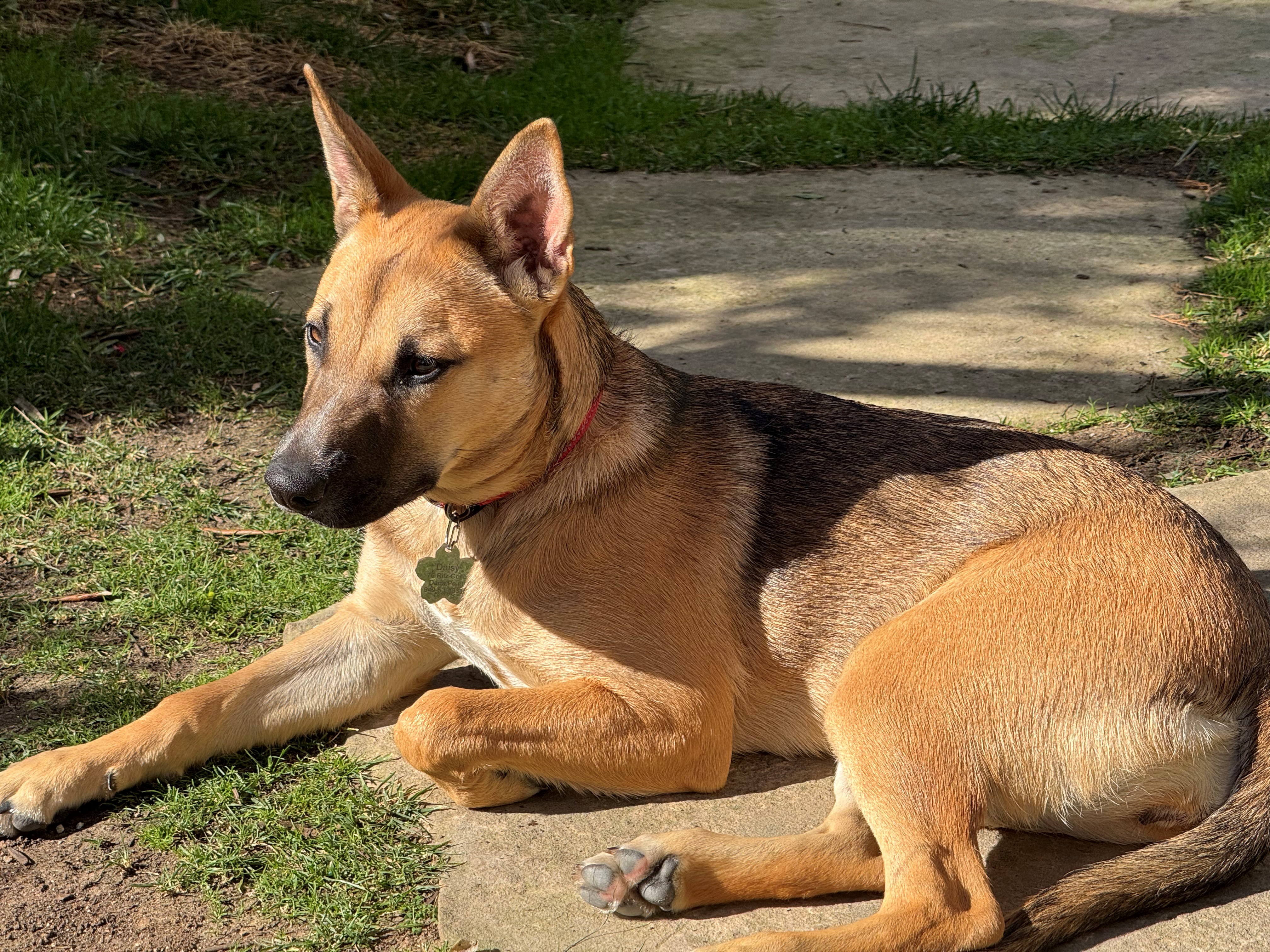
The “Man’s” in my article may be a “Girl’s” like my little girl, Daisy Jane.
There are phrases so familiar that we stop hearing them. “A dog is man’s best friend” is one of them. It sits in the language like an old armchair—slightly worn, deeply familiar, and still more reliable than most modern furniture. At first glance, it sounds sentimental, maybe even a little lazy. But some ideas last not because they are sugary, but because they survive repeated contact with reality.
This one has.
For thousands of years, dogs have lived beside human beings—first near our camps, then in our homes, and eventually in the center of our emotional lives. Researchers still debate the finer points of how the bond developed, but the general point is clear enough: dogs did not merely tolerate us; they adapted to us, studied us, and in many cases learned to manage us better than we manage ourselves. Studies and reviews continue to describe dogs as unusually skilled at reading human cues, emotional tone, and social behavior.
That alone is impressive.
After all, most people can’t read a room, a calendar invitation, or the phrase “per my last email,” yet the average dog can detect sadness, tension, excitement, guilt, and the sound of a cheese wrapper from two zip codes away.
A dog does not care what you do for a living unless your job somehow delays dinner. He has no interest in your résumé, your title, your social rank, your political branding, or whether you were “a thought leader” on LinkedIn this quarter. He does not ask how many followers you have, whether your kitchen counters are made of quartz, or whether your presentation had enough stakeholder alignment. A dog judges you by much older and better standards: Did you come home? Are you one of his people? Do you mean well? And are we, in fact, going outside right now?
There is a moral elegance in that.
Human beings, by contrast, have developed whole industries around pretending to like one another. We network. We posture. We smile professionally. We send upbeat emails with the emotional warmth of a parking citation.
The dog has skipped all of that and gone straight to the essential question: Are you mine, and am I yours? It is one of the few relationships left on Earth without a brand consultant attached.
That may help explain why the human-dog bond remains so emotionally powerful. A recent study reported in Scientific Reports found that many owners experience their relationship with a dog as overlapping in meaningful ways with bonds formed with close friends or children, especially in areas like companionship, affection, and Trust. That does not mean your Labrador should handle estate planning or be seated at Thanksgiving between your aunt and your CPA. It does mean the emotional significance people assign to dogs is not mere melodrama in a fleece vest. It reflects something real.
Science, in fact, has been inching toward what dog owners have known all along: that dogs are not just decorative mammals who shed on dark clothing.
Research summarized in Dogs, Horses, and Mules describes dogs as especially attuned to human communication and emotional safety, and broader public health sources note that interacting with animals can reduce stress, lower loneliness, and increase social support. Some research also suggests dog companionship may be linked to greater physical activity because, unlike an elliptical machine, a dog will stare at you with judgment until you get up and walk.
Even brief contact appears to help. A 2025 study reported that 15 minutes of interaction with a dog was associated with reduced stress among college students, including lower self-reported stress and lower cortisol levels. Which is remarkable when you consider that fifteen minutes on social media usually produces the opposite effect and leaves a person irrationally angry about strangers, avocados, or both.
Still, the strongest case for the dog is not made in journals. It is made at the front door.
Nobody greets you like a dog. Not your spouse on Tax Day. Not your broker after a rate hike. Not your doctor after bloodwork. Not even your children, once they learn to drive. A dog greets your return as though the Allied forces have just arrived and civilization has been saved. You may have gone six hours to buy printer ink and antacids, but to the dog, you have crossed an ocean, survived a war, and returned victorious.
That kind of welcome does something to a person.
It reminds us that love does not always need commentary, diagnosis, metrics, or a seven-part podcast series. Sometimes it is simply joy at your return. The dog does not ask whether your quarter went well, whether your article performed, or whether your strategic vision was fully implemented. He is not reviewing your life for efficiency. He is celebrating the fact that you still exist and seem to have opposable thumbs.
And perhaps that is the secret.
A dog lives in the plain truth that human beings keep trying to improve until they ruin them. Food is good. Loyalty matters. Walks are exciting. Naps are noble. Home is where the familiar people are. Suspicion of mail carriers is a civic duty. These are not the thoughts of a fool. These are the principles of a creature who has escaped mission statements.
That does not mean dogs are perfect, of course. They shed, drool, bark at irrational things, destroy expensive shoes, and occasionally behave like furry lobbyists for chaos. Some of them will defend the household against leaves, shadows, and their own reflections. Others possess the emotional resilience of a Victorian poet and collapse theatrically if dinner is served four minutes late. But these flaws only make the whole arrangement more charming. Unlike human flaws, canine flaws are rarely accompanied by PowerPoint.
And then there is loyalty, the old-fashioned kind, the kind modern people claim to want while keeping one foot outside. A dog is loyal in the daily sense, which is the only sense that matters. He waits. He notices. He stays close. He forgives me quickly. He does not keep a spreadsheet of grievances.
He does not revisit a comment from last April during an unrelated argument in November. He does not say, “That’s interesting,” when it is clearly not interesting. He means his affection, and he repeats it with stunning discipline.
That is why losing a dog feels so disproportionate to those who have never had one and so devastating to those who have. You do not merely lose an animal. You lose a witness. A little four-legged archivist of your daily life. A creature who knew the sound of your car, the rhythm of your footsteps, the difference between your tired sigh and your irritated one, and the exact point in the evening when you were weak enough to share your sandwich.
Dogs become part of the private grammar of a household. When they are gone, the silence is not general. It is specific.
So why does the dog still deserve the title of man’s best friend?
Not because dogs are the most useful animals, but History makes a strong case for them. Not because they are the easiest companions, because anyone who has ever owned a puppy knows that “companion” is often a polite term for “small executive of destruction.” And not because they flatter us. Dogs are too perceptive for flattery. They know when we are sad, tense, happy, distracted, sick, or sneaking food in the kitchen under the cover of darkness.
No, the dog deserves the title because he offers one of the rarest things in modern life: affection without calculation.
Not blind affection. Dogs are not idiots. They know who forgot the treat. But they do practice a form of loyalty that is refreshingly free of vanity, posturing, and emotional accounting. They ask for presence more than polish. They care less about image than about attachment. They are not looking for excellence. They are looking for you.
In a century increasingly defined by speed, noise, and transactional relationships, the dog remains a stubborn monument to older virtues: faithfulness, cheerfulness, courage, forgiveness, attention, and Trust. He does not give TED Talks on these subjects. He does not monetize them. He lives them, often while rolling in something appalling.