Summary:
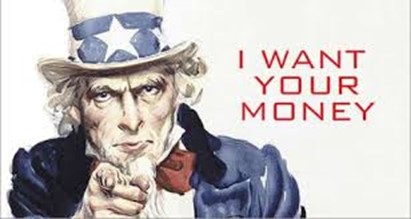
The most significant heists from American taxpayers have all been orchestrated by government actions that overtly redistribute money and capital away from the public (taxpayers) and into the pockets of Wall Street firms, Major Banks, Major Corporations, the Government, and the dependent class.
This leaves the public at a significant disadvantage, with their hard-earned money being siphoned off for the benefit of the elite. The sheer scale of these actions should alarm us all, as it directly impacts our financial well-being.
Here are massive redistribution actions taken by government leaders that robbed taxpayers and redistributed the benefits to the elite groups, creating an unjust and unfair system.
This flagrant injustice leaves the public at a significant disadvantage and should not be overlooked. Aside from the above beneficiaries, government employees and the dependent class of welfare dependents are the primary beneficiaries. This system, built on the backs of hardworking taxpayers, is a stark example of inequality and unfairness that we all should feel outraged about.
Article:
As you follow the trail of money and reinforcement of power elites, it becomes clear that the American public is not just a pawn in the game. They are the backbone of the financial system. Yet, they have little to no control over the situation, with their interests often being overlooked in favor of the elites.
This lack of power, this feeling of being at the mercy of a system that benefits the few at the expense of the many, should not just concern us but also engage us in the discussion and demand for change. It’s crucial that we, as a public, become more aware of these issues and advocate for the necessary reforms.
The Federal Reserve System:
The Federal Reserve System is a pivotal institution in these financial dynamics, established in 1913.
Woodrow Wilson signed the Federal Reserve Act, allowing a private banking cartel to become the central bank of the United States. This gave the 12 Federal Reserve banks the authority to print money, providing a safe, flexible, and stable monetary and financial system. The purpose was to address the threat of bank runs that characterized the Panic of 1907 and foster a sound banking system and a healthy economy—understanding this historical context is essential for comprehending the current financial landscape.
The 12 private banks were selected due to an earlier event. In 1910, a group of the wealthiest entrepreneurs, including representatives from the Rockefeller and Morgan banking interests, met on Jekyll Island, off the coast of Georgia. Their goal was to create a secret cartel and drive all non-member banks out of business. This meeting, kept secret for years, laid the groundwork for the Federal Reserve System’s establishment in 1913.
Today, these Federal Reserve banks wield tremendous power and receive preferential treatment by creating money and profiting from the system at the public’s expense. The constant expansion of the money supply by issuing new fiat currency into the financial system leads to public debt that the Government has no intention of repaying, setting the stage for a future financial crisis. This public debt, primarily resulting from the Government’s borrowing from the Federal Reserve, is a burden on taxpayers and a potential threat to our country’s future economic stability. The possible Impact of these actions on our future financial stability should prompt us all to be more cautious and aware of the risks we face.
For every dollar created by the Federal Reserve, taxpayers owe a corresponding new dollar of debt, which also systematically erodes the dollar’s purchasing power.
LBJ’s Raiding of Social Security:
LBJ’s Action was a significant event in the History of government financial practices and had far-reaching consequences. President Lyndon B Johnson issued an executive order in 1968 to raid the Social Security Trust Fund to balance the federal budget and close the gap in the federal deficit, pretending that the budget had been balanced Johnson did not want to raise taxes but needed money for several ambitious government programs, including the Vietnam War, the Great Society War on Poverty (expanded welfare programs), and the NASA Space Rac.
Thus, a star was born in the misappropriation of the Social Security Trust Fund to conceal the size of the overall federal budget deficit. No President or administration has ever reversed this, allowing the Social Security system to accumulate tangible assets to pay for future retirees. This event had a profound Impact on the future of the Social Security system and the financial burden it places on taxpayers.
Currently, active workers pay Social Security benefits to recipients. In fiscal year 2018, Social Security took in $912 billion and spent $991 billion, resulting in a $79 billion shortfall that had to be covered.
The Social Security Trust Fund ($2.9 trillion) and the Federal Employee and Military Retirement Funds ($2 trillion) are part of the national debt. They are not assets at all. They are a hollow shell filled with debt instruments that will never be paid back. All that remains as security with these agencies is a digital file containing non-negotiable bonds issued by the Bureau of Public Debt. The Government can only redeem these debt instruments, creating more debt to replace the debt.
Imagine that assets on these Trust Funds’ books were swapped for debt instruments expected to be owed and paid from future taxpayer receipts. This was the ultimate form of financial prestidigitation, a term for sleight of hand or trickery in economic matters. Yes, the debt you owe in the future becomes an asset held on your behalf, paying you when you repay the original debt.
Your future Social Security payments are essentially a hollow shell of a debt instrument that can be paid only by current taxpayers or by issuing new debt. It is bookkeeping magic.
This strategy has worked so far. However, the accrued government direct debt obligations and the interest due, coupled with underfunded pension and medical obligations, consumed the entire national budget. Then the Ponzi-based merry-go-round came to a halt. The Ponzi scheme is a fraudulent investment scheme in which returns are paid to earlier investors from the capital of newer investors, rather than from underlying business profits. In this context, the Government relies on future taxpayers to pay off the debt it is accumulating now, which is unsustainable in the long run.
Allowing Public Employees the Right to Collective Bargain:
President Franklin D. Roosevelt’s letter, dated 14 July 1937, entitled Letter on the Resolution of Federation of Federal Employees Against Strikes in Federal Service, issued a stern warning against allowing public employees to unionize and collectively bargain.
In 1962, John F. Kennedy issued an executive order allowing public employees to form labor unions and engage in collective bargaining to secure higher pay and benefits. Employees were given the right to bargain on behalf of the people they represented, and those they represented would pay the additional benefits they bargained for.
Public employees were given a monopoly over what they demanded. If they chose to strike and refused to work, they could not be replaced by other workers who might get better results for less compensation. If they did not get what they wanted, they were given the right to strike and shut down parts or all of public services, such as schools, transportation, libraries, fire stations, police services, and other essential services we rely on and pay taxes for.
In 1971, President Richard Nixon implemented wage and price freezes in response to increasing inflation and surging imports, and announced that Gold would no longer back the U.S. currency. He unilaterally canceled the United States dollar’s right to international convertibility into Gold. This created a fiat money system in which a physical commodity like Gold does not back the currency’s value, but the Government’s full faith and credit do. No caps were placed upon creating or issuing more money into the system, thus creating more debt.
Sustainability has always been a subliminal topic. He has increased direct debt, indirect debt, and unfunded pension obligations by Trillions, which will come due over the next 10 to 30 years. The only solution is to issue more debt to support the Ponzi system, a progressive tax system in which the tax rate increases as income increases.
- Total Debt Increase: During his presidency (1969–1974), the official national debt rose from approximately $353.7 billion to $475.1 billion, an increase of about $121.3 billion.
- Unfunded Obligations: Critics of the era’s fiscal policy, including proponents of a return to the Gold standard, often argue that the “Nixon Shock” of 1971—which ended the dollar’s convertibility to Gold—allowed for a massive expansion of “hidden” or indirect debt.
This system penalizes financial success. For example, a lower-wage earner may pay a 10% tax, while a higher earner pays a 60% tax rate. This is a massive systematic redistribution scheme. Since the lower socioeconomic subset of voters is more effective as a voting bloc, they always collectively vote for higher rates for higher earners.
The only way to mitigate the Impact of federal debt obligations is to systematically erode the dollar’s purchasing power. Since the Federal Reserve was established in 1913, inflation has increased by 3,087 percent. This process has decimated the middle class in the United States and will continue to do so.
https://www. usinflationcalculator. com/
In 1,913 consumers could have dinner at Johnny’s Place in Salt Lake City. Ten cents would buy dinner, including meat, vegetables, bread, and tea or coffee. The average worker earned between $200 and $400 annually, 55 cents to $1. Ten p—teny. A professional high-level accountant may earn $2,000 per year or $5. 48 per day.
The official U.S. Consumer Price Index is widely used for inflation calculations. If we calculate the average inflation rate from 1913 to 2016, we obtain 3.22%. In some decades, inflation was significantly higher; in others, it was lower. Prices doubled every 20 years. Note that ten decades represent five doublings of $10. 00 doubled five times would mean 1× 2 = 20 × 5 = 10000. This calculation assumes a fixed and static value, not compounded or cumulative over time.
However, we have a cumulative effect and a compounding cumulative effect. Inflation works similarly to compound interest, which can multiply your savings and investment income over many years. The real compound cumulative inflation rate from 1913 to 2026 is 3,174%. You would now have to spend $3,174 for the same basket of goods and services that could be purchased for $1. 00 in 1913.
The Dodd-Frank Act was approved in 2010 under the Obama administration, creating a protection racket for large banks. The bill states that deposit accounts, including checking and savings accounts, are expressly subordinated to derivative participants who may experience losses in the event of a market collapse.
A derivative is a contract between two or more parties that derives its price from fluctuations in the underlying assets. Common underlying assets in derivative bets include stocks, bonds, commodities, currencies, interest rates, and market indexes. The regulated banking system faces $247 trillion in counterparty risk in the derivatives market through Wall Street, including hedging interest rates and depositor accounts held in the U.S. banking system. These counterparty bets carry the greatest risk exposure, including the potential for a total loss or a long-delayed recovery.
The Greatest Heist, Ten Times Larger, Is Occurring Daily:
The hidden heist is sixfold. The process systematically transfers money and wealth from ordinary taxpayers to the financial elites.
- Financialization
- Injection of fiat currency into the system
- Manipulation of interest rates
- Derivatives contracts, hedging bets
- The Dodd-Frank Act of 2010 is a protection racket for players who engage in all the above.e
- Dumping derivatives losses on the taxpayers for government excess spending and potential economic collapse. Therein lies the rigged system, pitting the top 1% against the bottom 99%.
Financialization involves utilizing financial markets, institutions, and the elite to exert power and influence over the economy and its people. Financialization creates winners and losers, exacerbates income inequality, and exposes individuals to economic risks while insulating the elites from failure, as they can rely on a bailout.
Number one is the systematic forced reduction by the Government. The Government can finance the debt, significant corporations can borrow, and consumer debt appears to be lower. Stock buybacks are funded with super-low interest rates, Borrower at 3%, and your stock goes up at 10-15%, you look like a genius. Corporations use highly leveraged financial repression to enhance yields.
- I’m wondering what expense? Saving rates are at an all-time low, wages are static, and prices rise by 15% annually. The above group receives 90% of the benefits, while every day, taxpayers receive the remaining 10%.
- The wealth transferred from the pockets of taxpayers and savers into the pockets of the elites exceeds $ 50 trillion. There has never been a recorded redistribution like this. Middle-class taxpayers will become surfers. The elites will pay large bonuses and take a well-deserved month off for vacation in the Hamptons.
Potential Derivatives Losses:
The Federal Reserve solved the 2008 economic meltdown by creating $29 trillion in new money through fiat and using that money to bail out the banks. However, that strategy may no longer be effective or practical.
In 2007, approximately $600 trillion of derivatives contracts were outstanding worldwide. If any central banks became insolvent, as did Lehman Brothers and American International Group (an international insurance Corporation that insures against losses on derivative contracts),
Today, there are estimated to be $714 trillion in derivatives (counterparty bets) worldwide; most are highly leveraged and interest rate-sensitive. To put this in perspective, the world’s GDP is $88 trillion. Assuming a 10% profit margin, this would reflect $8 8 trillion in profit from which to extract taxes.
The five too-big-to-fail (TBTF) banks account for 42% of all outstanding loans in the United States. The six most significant banks have 67% of all outstanding bank assets. They also collectively hold around $190 trillion in Derivative notional values. JPMorgan Chase, Goldman Sachs, Citibank, and Bank of America hold the most significant amounts.
The risk in the derivatives market is concentrated in the U.S. In 2011, four U.S. banks held 95%, or 9$9 of the U.S. derivatives. Depositors maintaining accounts with U.S. banks are subordinated to the risks posed by derivatives under the Dodd-Frank Act. Should derivative contracts default, no government in Government’s; ii, the Government’s full faith does not back derivatives, nor does the FDIC Insurance safety-net insure derivatives. In effect, the Dodd-Frank Act has shifted the ultimate risk for derivatives losses, resulting in significant profits for the banking industry. This will go down as one of the most critical financial heists in world History.
After a systemic financial meltdown, you may receive a congratulatory letter that states Dodd-Frank does not allow you to keep your money. But never fear; you will receive stock certificates in an otherwise bankrupt entity to replace the hard-earned cash you have now lost. The oligarch bankers win by taking a massive risk. If they fail, the financial losses are passed on to American taxpayers. The phrase money is safe in the bank no longer applies.