Summary
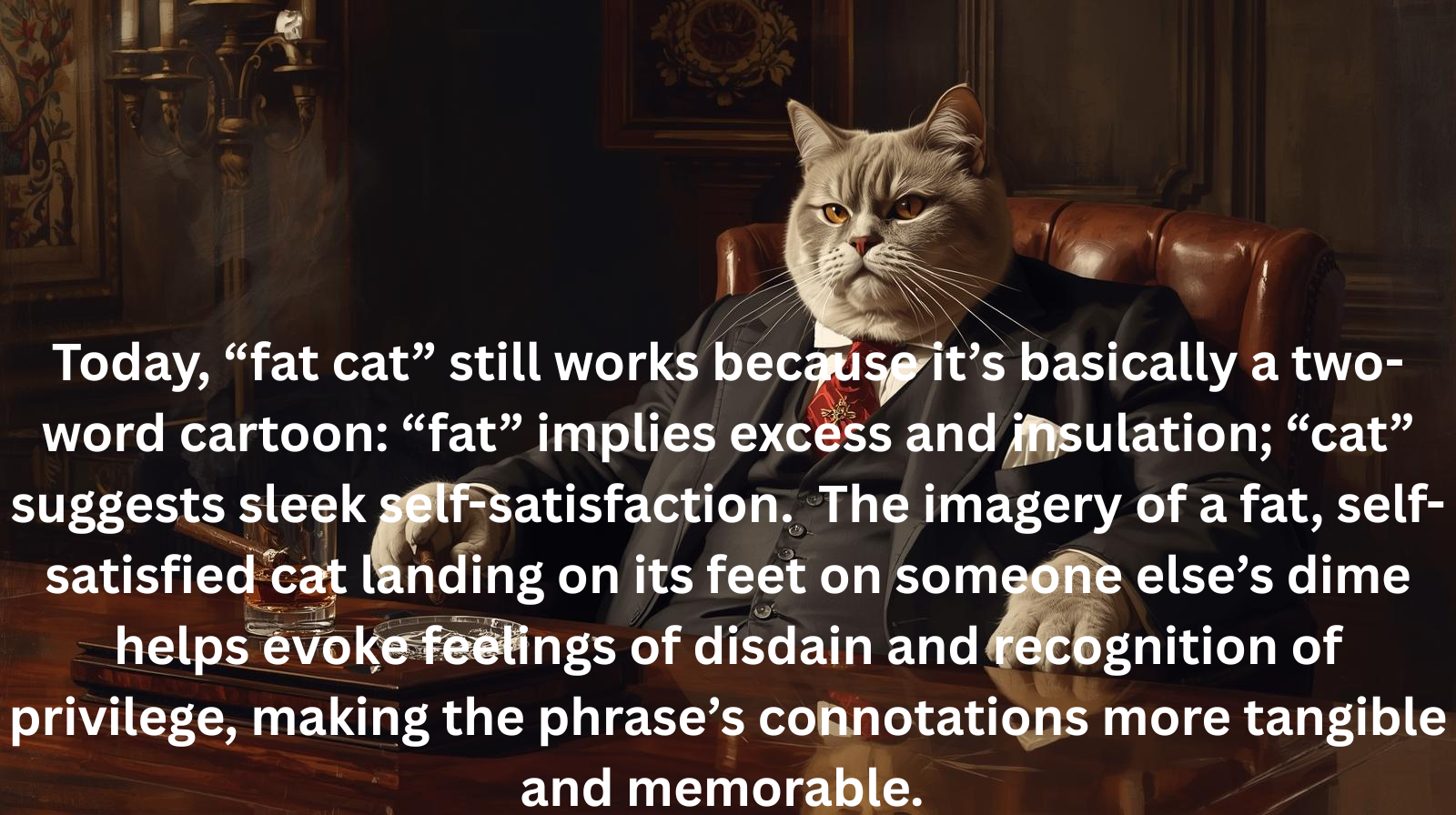
Call someone a “fat cat,” and you’re not commenting on their diet—you’re accusing them of living large while everyone else foots the bill. In modern English, fat cat usually means a wealthy, privileged “big shot,” often with a whiff of greed or cozy influence—especially in politics or corporate life. It’s a phrase designed to make the audience feel aware of social inequality and critique privilege, landing with a thud: soft, smug, and well-fed.
What’s funny is that “fat cat” didn’t begin as a generic insult for rich people. It started with a particular target: big-money political donors.
Linguists and reference sources trace the term to U.S. political slang in the 1920s, when wealthy backers funded campaigns and party machines. Understanding this History can make readers feel curious and more connected to the phrase’s evolution.
The phrase is closely linked to journalist Frank R. Kent of The Baltimore Sun, who helped popularize it by describing “Fat Cat” as what political insiders called the “sleek, rich fellows” who used their wealth to gain influence, making the origin more vivid and authoritative.
By 1928, the Oxford English Dictionary’s earliest evidence for the term appears in Kent’s writing, and from there the phrase padded beyond campaign donors to become a broader label for the comfortably powerful.