Summary
Everybody has an opinion. The World is drowned in them. Most are loud and poorly supervised. Uneducated people are the first to express opinions and the last to listen to others.
Epistemology is the branch of philosophy that asks, ‘How do you know that?’ to encourage curiosity and respect for careful thought.
That question separates thought from noise, knowledge from parroting, and disciplined judgment from intellectual cosplay.
What Epistemology Actually Is
Epistemology is the theory of knowledge that directly impacts how we evaluate claims in daily life, from news to personal beliefs. It studies what knowledge is, where it comes from, how it is justified, and where human understanding hits a wall. The term comes from the Greek episteme (knowledge) and logos (reason), but the issue is not academic decoration. It is practical, urgent, and unavoidable.
Every major argument—political, scientific, religious, financial, or personal—eventually runs into the same problem: What counts as knowledge, and what is just a confident guess wearing a necktie?
Why It Matters
Most people do not believe things because they have carefully examined them. They believe things because they heard them, repeated them, liked the source, or joined the tribe. That may be socially efficient, but it is not the same thing as knowing.
Epistemology matters because it forces discipline into the process of belief. It asks whether a claim is:
- True
- Justified
- Supported by evidence or reason
- Distinguishable from assumption, bias, or accident
Without epistemology, the loudest person in the room often wins by default. With it, noise must meet standards.
The Main Schools of Thought
Rationalism: Reason First
Rationalism argues that reason is the primary source of knowledge. Some truths do not need a laboratory or a weather report. Logic, mathematics, and formal analysis are not built from sensory scraps; they are worked out through the disciplined use of the mind.
Rationalism insists that reason is not optional equipment. It is central to understanding reality.
Empiricism: Show Me
Empiricism pushes back, arguing that knowledge comes through experience, observation, and the senses. You do not know the World by sitting in a chair, congratulating yourself on your logic. You know it by testing, observing, measuring, and comparing.
Empiricism is the philosophical version of “bring receipts.”
Skepticism: Slow Down
Skepticism questions whether certainty is ever as secure as people pretend. It is not intellectual sabotage; it is quality control. Skepticism reminds us that perception can mislead, memory can distort, and conclusions can outrun evidence.
In other words, skepticism is what keeps confidence from becoming fraud.
Virtue Epistemology: The Character of the Thinker
This view asks a different question: What kind of person is doing the believing? It emphasizes intellectual virtues such as honesty, humility, fairness, courage, and open-mindedness.
A dishonest or arrogant thinker can misuse even good information. Better thinking often requires better character.
Social Epistemology: Nobody Thinks Alone
Social epistemology examines how groups, institutions, media, schools, and communities shape what people accept as true. Knowledge is not formed in a vacuum. It is filtered through culture, authority, incentives, and influence.
That matters, because crowds can spread truth—or nonsense—with equal enthusiasm.
The Core Questions
What Is Knowledge?
Traditionally, knowledge has been defined as justified true belief. That means a claim must be true, believed, and supported by sufficient justification. Mere confidence does not qualify. Neither does lucky guessing.
How Is Belief Justified?
A belief becomes more than opinion when it is supported by evidence, reason, perception, memory, or trustworthy testimony. Epistemology asks which sources deserve confidence and when they should be challenged.
What Are the Limits of Human Understanding?
Human beings are not all-seeing machines. We forget, misread, exaggerate, assume, and leap to conclusions. Epistemology studies those limits so that people stop confusing mental habit with certainty.
How Is Knowledge Different from True Opinion?
A person can be right for the wrong reasons. A lucky guess may land on the truth, but luck is not knowledge. Epistemology is concerned with what turns a correct belief into a justified one.
The Major Thinkers
Plato
Plato helped frame the distinction between knowledge and mere opinion, launching one of philosophy’s longest-running debates.
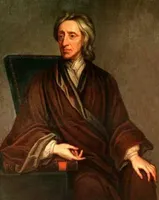
John Locke
Locke argued that the mind begins as a blank slate and that experience plays the central role in building knowledge.
René Descartes
Descartes doubted everything he could doubt to find something certain. His famous conclusion—“I think, therefore I am”—was his attempt to find bedrock beneath the fog.
Immanuel Kant
Kant tried to bridge rationalism and empiricism by arguing that the mind does not merely receive experience—it helps organize it.
David Hume
Hume exposed how fragile many human assumptions really are, especially when people speak too casually about cause, certainty, and reason.
Three Concepts That Matter
Justification
Justification is what keeps belief from becoming intellectual freeloading. It is the evidence or reasoning that gives a claim its legitimacy.
A Priori vs. A Posteriori
- A priori knowledge comes independently of experience.
- A posteriori knowledge depends on experience and observation.
This distinction matters because not every truth is learned the same way.
The Gettier Problem
The Gettier Problem challenged the old definition of knowledge as justified true belief by showing that people can sometimes arrive at a true belief through coincidence rather than genuine understanding.
That was philosophy’s way of saying: being right is not always the same as knowing why you are right.
Conclusion
Epistemology is not just an abstract concept for philosophers; it is essential for making informed decisions and critical thinking in everyday life. It asks whether beliefs are earned or merely adopted, whether facts are examined or repeated, and whether certainty is meaningful. Understanding helps us navigate a world full of opinions and misinformation with discipline and humility.
In a culture overflowing with instant opinions and borrowed convictions, epistemology does something rare and valuable: it demands proof, discipline, and humility before granting the title of knowledge.
Quotes
-
Everybody has an opinion. Epistemology asks which ones actually deserve to survive.
-
This article explains the difference between knowing something and merely sounding confident about it.
-
If you have ever asked, “How do you know that?” this article is your home turf.
-
Knowledge is not the same as volume, certainty, or tribal repetition—and this article shows why.
-
In a world drowning in opinions, epistemology is the life raft for disciplined thinking.
-
This piece cuts through intellectual fog and gets to the central question: what counts as real knowledge?
-
A lucky guess can be right. That does not make it knowledge.
-
Before people argue about truth, they ought to understand the rules of knowing.
-
Epistemology is the forgotten discipline that teaches people how not to be fooled.
-
If truth matters, this article is worth reading. If truth does not matter, that is a different problem.