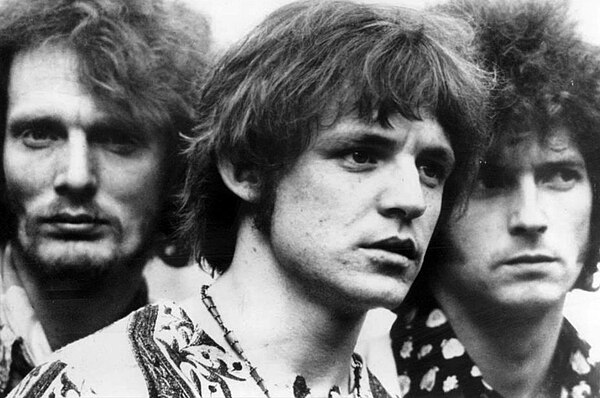
Cream was a British rock band formed in London in 1966, widely regarded as the first “supergroup” because its members—Eric Clapton (guitar), Jack Bruce (bass, vocals), and Ginger Baker (drums)—were already prominent musicians before joining forces. Their music fused blues rock, psychedelic rock, and hard rock, and they were celebrated for virtuosic instrumental skills and extended live improvisations. Despite existing for only about three years, Cream released four influential albums:
https://www.youtube.com/watch?v=cCJFDyTO_Ao
- Fresh Cream (1966)
- Disraeli Gears (1967)
- Wheels of Fire (1968)
- Goodbye (1969)
They sold over 15 million records worldwide and were inducted into the Rock and Roll Hall of Fame in 1993. Their brief career not only helped shape the sound of late-1960s rock but also left a lasting Impact, influencing future giants like Led Zeppelin and Black Sabbath, a testament to Cream’s enduring influence on the rock genre.
“White Room”: Origins and Meaning
Released in 1968 on the album Wheels of Fire, “White Room” became one of Cream’s biggest hits, reaching No. 6 on the Billboard Hot 100 and earning a place among Rolling Stone’s “500 Greatest Songs of All Time.” The song was composed by Jack Bruce with lyrics by poet Pete Brown, who adapted them from an eight-page poem he wrote during a personal turning point. Brown had been living in an actual, white-painted room where he gave up drugs and alcohol, and the lyrics reflect themes of isolation, farewell, and emotional struggle. The song’s unique sound was achieved through a meticulous recording process, with each instrument carefully layered to create a rich, textured sound.
The imagery—“white room with black curtains,” “silver horses ran down moonbeams”—is highly metaphorical, evoking contrasts between purity and darkness, hope and despair. Interpretations vary:
- Personal transition: Brown’s own experience of sobriety and introspection.
- Romantic farewell: A goodbye at a train station, symbolizing departure and change.
- Drug undertones: Some see references to addiction and recovery.
Musical Innovation
“White Room” is a psychedelic rock masterpiece, notable for its innovative musical elements that showcase Cream’s artistic and technical brilliance.
- Unusual time signature: A 5/4 intro played on timpani before shifting to standard time.
- Eric Clapton’s wah-wah guitar solo, inspired by Jimi Hendrix, became one of the most excellent wah solos in rock History.
- Layered instrumentation: Jack Bruce’s melodic basslines, Ginger Baker’s dynamic drumming, and Felix Pappalardi’s viola contributions.
Impact and Legacy
“White Room” epitomized the psychedelic era and influenced genres from progressive rock to heavy metal. Its experimental structure and poetic lyrics set new standards for rock songwriting. The track remains a cultural touchstone, frequently featured in films and TV and covered by numerous artists. Its influence can be seen in the work of contemporary bands, and it remains a popular choice for filmmakers and musicians seeking to capture the spirit of the late 1960s.
Pete Brown’s lyrics for “White Room” were inspired by a deeply personal experience. Brown had been living in a stark, white-painted room during a period of significant life change when he decided to give up drugs and alcohol. The room became a symbol of isolation and introspection, and the imagery in the song—such as “white room with black curtains” and “silver horses”—reflects that sense of contrast and transition.
The lyrics originated from an eight-page poem Brown wrote during this time, which he later condensed for the song. Themes include farewell, emotional struggle, and search for clarity, all drawn from his own journey toward sobriety and self-reflection. Some interpretations also suggest undertones of romantic departure and existential uncertainty.