Videos:
https://www.youtube.com/watch?v=RWdTWuZAA7A
https://www.youtube.com/watch?v=KUwjNBjqR-c
https://www.youtube.com/watch?v=etundhQa724
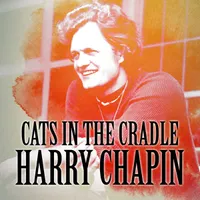
Released in 1974, “Cats in the Cradle” is one of the most enduring songs about family relationships and the quiet consequences of neglect. Performed by Harry Chapin and written by Chapin with his wife, Sandra Chapin, the song tells a generational story of a father who is too busy to spend time with his son, only to realize later that the pattern has repeated itself.
The song unfolds like a short story, tracing the passage of time as career demands and postponed promises slowly erode the father-son bond. What makes the narrative powerful is its ordinariness: there is no malice, only distraction, ambition, and the belief that there will always be time later. By the song’s conclusion, that assumption is revealed as the central tragedy.
Musically, Chapin uses a simple folk arrangement that keeps the focus on the lyrics. His conversational vocal style makes the story feel personal and intimate, as if the listener is being let in on a private realization rather than a public confession. This restraint allows the emotional weight to build naturally, without sentimentality.
Culturally, “Cats in the Cradle” struck a nerve in the 1970s, when work, identity, and success were increasingly intertwined. Its message, however, has proven timeless. The song continues to resonate across generations because it speaks to a universal fear: recognizing too late that the moments that mattered most were the ones that were postponed.
Ultimately, “Cats in the Cradle” is not just about fatherhood—it is a warning about priorities. Its lasting Impact lies in how gently yet firmly it asks listeners to consider what they are sacrificing today and whether tomorrow is guaranteed the chance to make it right.
Harry Chapin did not invent the story of “Cats in the Cradle” from scratch. Its emotional power stems from its grounding in real family experience, first observed by his wife and then personally internalized by Chapin himself.
What inspired Harry Chapin to write “Cats in the Cradle”
1. A poem written by Sandy Chapin
The song began as a poem written by Harry Chapin’s wife, Sandra “Sandy” Chapin. Her poem was inspired by watching the strained relationship between her first husband and his father, where emotional distance and missed time quietly shaped the bond between generations. Sandy noticed how the son eventually mirrored the very behaviors that had once disappointed him as a child.
Harry recognized the poem’s universality and adapted it into a song, preserving its cyclical structure while giving it narrative momentum and musical form.
2. A cautionary mirror of Chapin’s own life
Although the story was not originally autobiographical, Chapin later admitted it became a warning to himself. At the time, he was a relentlessly touring musician and activist, often away from home for long stretches. The song reflected his fear that professional ambition could unintentionally lead to emotional absence as a father.
Chapin acknowledged in interviews that the song influenced how he thought about parenting and time, even as his demanding career made it difficult to escape the tension.
3. Everyday neglect, not villainy
Sandy Chapin emphasized that the song was never meant to portray the father as cruel or uncaring. Instead, it focused on ordinary, well-intentioned neglect—the kind that comes from believing there will always be more time later. That realism is why the song resonated so deeply with listeners across generations.
4. A story meant to make listeners uncomfortable
Harry Chapin often said the song unsettled him as much as it did audiences. Unlike protest songs aimed outward, “Cats in the Cradle” turns the critique inward, forcing listeners—especially parents—to confront uncomfortable questions about priorities and presence.