Introduction
Ever heard someone say “Ah, shucks!” after receiving a compliment or when something doesn’t go quite right? This simple phrase carries warmth, humility, and a touch of nostalgia. While it may sound old-fashioned today, its roots reflect rural life, modest manners, and the evolution of American slang.
What Does “Ah, Shucks!” Mean?
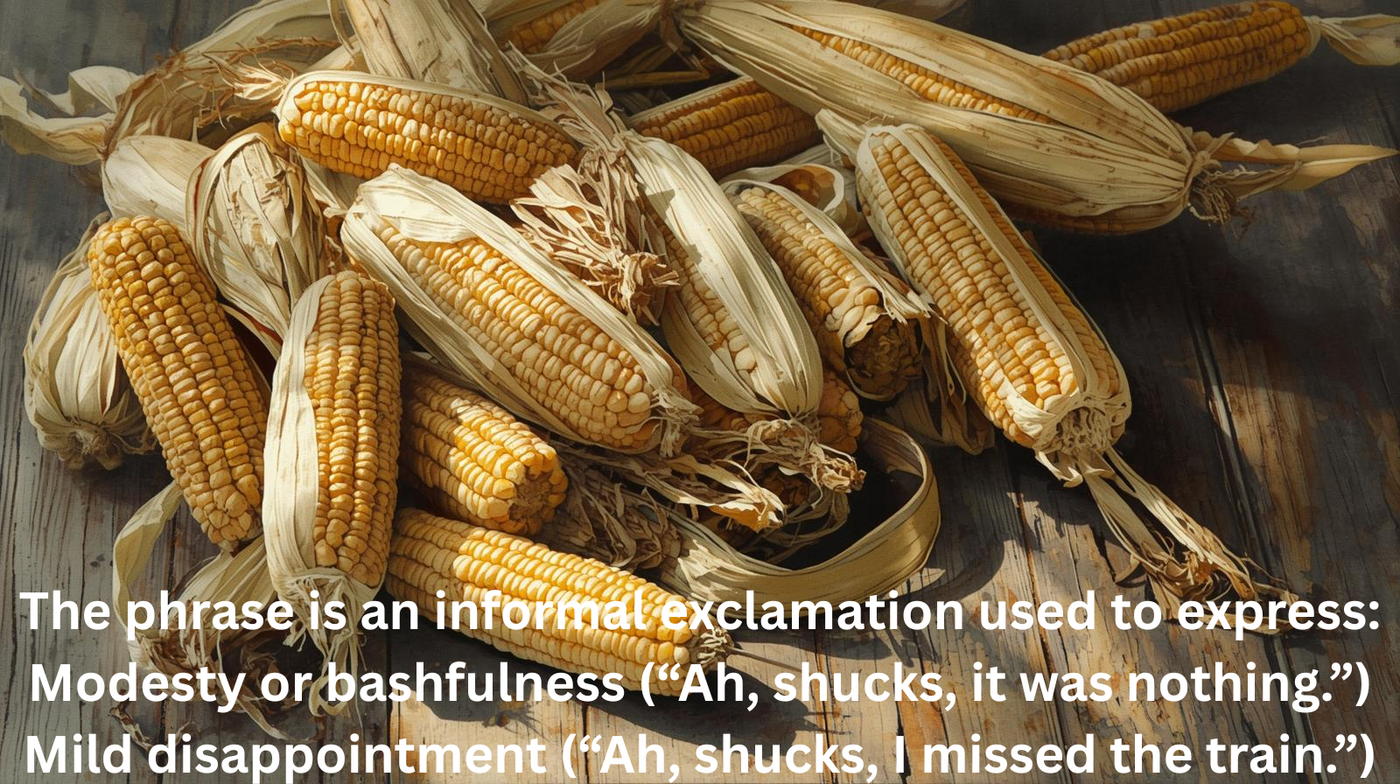
The phrase is an informal exclamation used to express:
- Modesty or bashfulness (“Ah, shucks, it was nothing.”)
- Mild disappointment (“Ah, shucks, I missed the train.”)
It’s lighthearted and carries a tone of humility or gentle frustration—never harsh or angry. Think of it as a verbal shrug, softening the moment with charm.
Where Did It Come From?
- Original Meaning of “Shucks”: In the 1800s, shucks referred to the husks of corn or other grains—something considered trivial or worthless.
- Evolution into Slang: Rural Americans began using “shucks” as a mild oath, similar to “darn” or “nuts,” to downplay importance.
- Folksy Charm: By the late 19th and early 20th centuries, “Aw, shucks!” became a common way to express bashfulness, popularized in literature and early films featuring humble, down-to-earth characters.
Cultural Impact
The phrase became a staple in American pop culture, often associated with wholesome, modest personalities. Classic Hollywood films and country music helped cement its reputation as a symbol of sincerity and humility.
Modern Usage
While “Ah, shucks!” isn’t as common today, it still pops up in casual conversation, often to convey modesty or playful disappointment. It’s a phrase that feels warm, approachable, and distinctly American—perfect for adding a touch of charm to everyday speech.
Practical Examples
- Receiving Praise
“Ah, shucks, I just did my best.”
- Reacting to Mild Bad News:
“Ah, shucks, I forgot my umbrella.”
Takeaway
“Ah, shucks!—a simple phrase that turns modesty into charm.”
Relevant Quote
“True humility is not thinking less of yourself; it is thinking of yourself less.” – C.S. Lewis.
This quote pairs well with the phrase, underscoring the timeless nature of modesty.